Does buying near a London school
give my child a place?
If your child’s schooling shapes your home search, start with the admission arrangements for their entry year. This guide is a pre-purchase checklist for families with school-age children in London, without ranking schools or neighbourhoods.
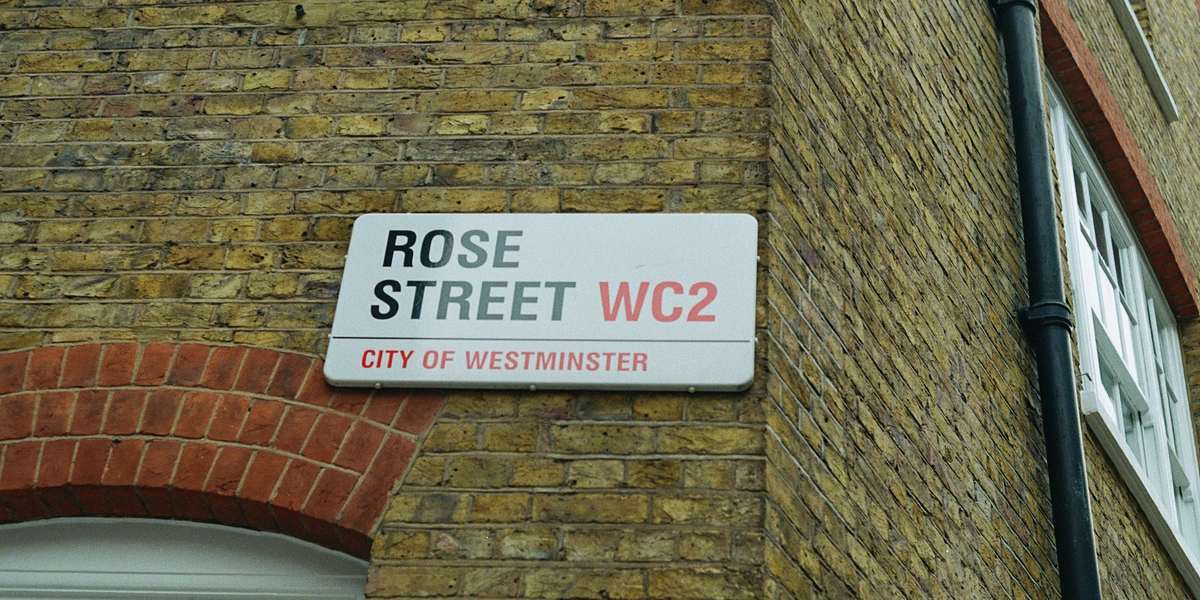
Proximity may give priority;
it does not secure a place.
No. Buying next to a school does not give your child an automatic right to attend it. Admission criteria differ between schools. Living in a catchment area, a geographical area that may receive priority, is not a guarantee either. Read the school or council’s published rules for the relevant entry year, year group and capacity. S1 S2
Contents: Who sets the admission criteria? · Is catchment the same as distance? · Is owning a home the same as living there? · When are the application deadlines? · Moving from overseas and in-year admission · What changes for private schools? · How do I find an Ofsted report? · Clarify these points in writing before buying
Who sets the admission criteria?
GOV.UK says schools or councils usually set the criteria. These may include proximity, a sibling at the school, religion at faith schools or an entrance test at selective schools. State-funded schools must give priority to looked-after and previously looked-after children. S1
The School Admissions Code 2021 sets the framework for state-funded school admissions in England. Find the arrangements published for your child’s entry year. Identify the admission authority, entry year group, admission number and priority order when applications exceed places. S2
Is catchment the same as distance?
A catchment is a geographical priority area; there is no single boundary rule covering all schools. The Code requires clearly defined areas. Families outside a catchment can still express a preference for the school. S2
Where distance is used, the arrangements must explain the home address definition, measurement points at the school or other nodal points, and the method. Do not substitute a mapping app’s walking route for the admission calculation. Ask the school or council for its method. S2
- Is there a catchment map for that year, and where does the proposed address sit?
- Which method and points are used to measure distance?
- Does distance apply to every application or within a particular priority group?
- Which address counts for shared care, and what rule resolves ties?
If you consult previous last-offered distances, record their year and priority category. Do not treat them as a fixed boundary for the following year.
Is owning a home the same as living there?
Check the council’s actual-residence rules. Havering, for example, requires the child’s address to be where they live for most of the school week and their primary guardian normally lives. Ownership alone does not establish this. S5
Hackney’s page for 2027 entry says it checks council records and may request further evidence. A move may require exchange-of-contracts evidence or a signed tenancy agreement plus residence evidence such as a utility bill. An offer obtained through false or deliberately misleading information will be withdrawn; checks can continue after a child starts. S4
These two councils do not provide a single document list for London. Do not misrepresent an address where your child does not live as their home. Ask the relevant council in writing how a new-build completion date fits with the deadline for proving the address.
When are the application deadlines?
For the normal admission round, GOV.UK says primary applications open in September and close on 15 January. Secondary applications usually open on 1 September and close on 31 October. These dates fall in the application cycle preceding the September start. S3
For September 2027 entry, that means 31 October 2026 for secondary and 15 January 2027 for primary. Confirm the age-appropriate entry group, local timetable, address-change deadline and any supplementary-form deadline with the council or school. A home purchase does not extend the application deadline.
Moving from overseas and in-year admission
If you need a place outside the normal entry round, ask about in-year admission. DfE guidance says an application must not be excluded simply because the family is still abroad. Establish whether the council or school receives it, and give your planned move and required start dates. S6
Consideration of an application does not establish a vacancy at your preferred school. Evidence of the move and the address used matter. Parents must check whether their child’s UK entry conditions permit school study; a school application does not create that right. S6
Read our home ownership and residence permission guide for the distinction between a purchase and immigration matters.
What changes for private schools?
Private schools, also called independent schools in English sources, charge fees. Apply directly to the school. Request its age-group requirements, assessment process, timetable and fees; do not transfer a state-school catchment rule to a private school. S3 S7
How do I find an Ofsted report?
Use GOV.UK’s Ofsted inspection report service. Check the school name and report date, then read the full report. For a private school, ask which inspectorate publishes its reports; not all private schools are inspected by Ofsted. S7 S8
Keep inspection reports separate from admission arrangements. Assess the current admission document and your child’s needs alongside your home search.
Clarify these points in writing before buying
- The entry year and year group for your child’s date of birth, and the application route.
- Admission criteria, priority order, catchment map and distance method.
- Which address counts, on what date, and what evidence is required.
- Application, supplementary-form and move-notification deadlines; current vacancies for in-year applications.
- The latest report from Ofsted or the relevant inspectorate, and any further information needed from the school.
For a university-age child, buying near a university is a different subject. That guide covers the campus journey, running costs and plans after graduation; this page focuses on school admission arrangements.
OGKinvest’s role and fee
OGKinvest introduces buyers to new-build developers and is paid by the developer. Your solicitor handles legal review; the relevant surveyor or specialist handles technical assessment. The relevant authorities decide school admissions and planning applications.
The sources
behind this guide.
- S1: GOV.UK: School admissions, Admission criteria. Admission criteria vary by school.
- S2: DfE: School admissions code 2021. Distance and catchment: 1.13–1.14; glossary.
- S3: GOV.UK: School admissions, How to apply. 15 January / 31 October; moving and direct private-school applications.
- S4: Hackney Education: Providing your home address. Address evidence and withdrawal for misleading applications.
- S5: Havering: Fraudulent applications / Address of convenience. Actual residence and address investigation.
- S6: DfE: School applications from overseas children. Overseas in-year applications and immigration conditions for study.
- S7: GOV.UK: Types of school, Private schools. Fee-paying schools and inspection reports.
- S8: GOV.UK: Find an Ofsted inspection report. Find school inspection reports.
Last checked: 16 October 2026. General information for England, not a promise of a school place, visa or education entitlement. Confirm arrangements with the school or council and legal questions with the relevant adviser.
Consider the home’s location
alongside your family’s plans.
Let us discuss area, moving dates and daily journeys for your home search. The school or council makes the admission decision.
Book a ConsultationBack to Insights