Before buying a home in London,
how should I check flood risk?
Distance from the river alone is not enough. Read the different mapped risks alongside historical records, the planning file and an insurance quote to identify questions before buying.
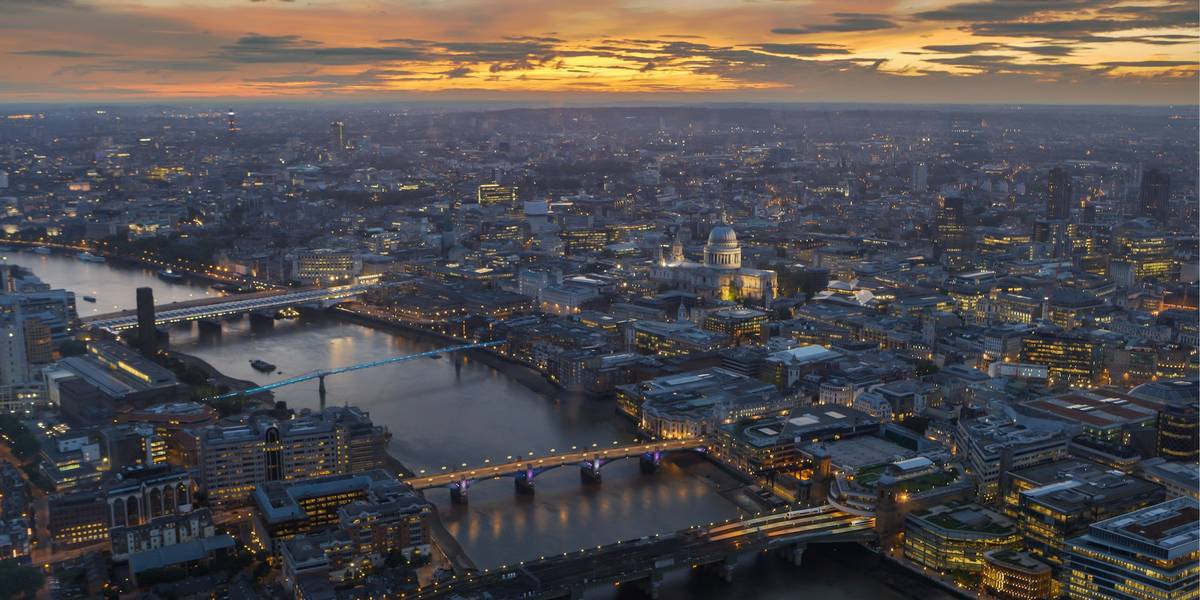
Before buying,
read the documents together.
Read the Environment Agency’s long-term river/sea, surface water and available groundwater results separately. Follow up with legal searches, development documents and an insurance quote. The map is not a safety certificate for an individual flat.
Start with the Environment Agency map
Start with GOV.UK’s Check the long term flood risk service. Select the correct location using its postcode, read each risk category separately, and save the result and check date. The service covers rivers and the sea, surface water, reservoirs and groundwater where data is available. It also explains how climate change may increase risk. (F1)
Do not substitute the river/sea result for the surface water result. Heavy rain can cause surface water, river and groundwater flooding. A low result in one category does not remove the need to examine the others. (F4)
The map does not give the chance of an individual home flooding. It also excludes sources such as blocked drains and burst pipes. Missing groundwater data should not be read as no risk. (F1)
Historical records and your solicitor’s searches
You can request Environment Agency flood history for the area around an address or postcode. It does not hold records for every area: no record is not evidence that flooding has never occurred. You can also contact the council’s lead local flood authority where needed. (F2)
Ask your solicitor what the environmental search covers. GOV.UK lists it among the searches for a purchase and says your legal representative will advise on additional searches such as flood risk. Share your map results and any history supplied by the seller. (F5, F6)
If a report recommends further investigation, establish which technical specialist should answer which question. Solicitors and surveyors have different roles. OGKinvest does not carry out their investigations.
Do you still need checks with the Thames Barrier?
Yes. The Environment Agency describes the Thames Barrier’s role in protecting central London against tidal surges. That does not eliminate every type of flooding at an individual home. (F3)
Thames Estuary 2100 (TE2100) plans maintenance and phased upgrades of tidal defences to adapt to rising sea levels. Protection differs upstream and downstream of the barrier; downstream areas rely on walls and embankments and are not protected by the Thames Barrier. Check your location separately using the maps and development documents. (F4)
Do not use a river view or distance from the river as your only risk measure. Combine area selection with checks for the particular address.
What to request in a new development’s planning file
The need for a flood risk assessment (FRA) with a planning application depends on the location and development. Examples include developments in Flood Zone 2 or 3 and sites of at least one hectare in Zone 1; some smaller Zone 1 developments also require one. (F8)
Ask the developer for the planning application reference, any FRA, drainage plans and evidence addressing flood/drainage conditions. Have your solicitor match them to the council’s planning file. Ask about climate change, safe access and escape, essential building services and maintenance of sustainable drainage systems (SuDS). (F9)
For an upper-floor flat, include building access, basements/car parks, electricity and communal services in your questions. Let the specialist determine the scope of investigation. Record document dates and scope when comparing homes. (F9)
Insurance and Flood Re: the distinction for new homes
Before buying, obtain a written insurance quote for the address and intended use. Ask about flood cover, exclusions, the excess you would pay on a claim and how long the quote remains valid. For a flat, establish with your solicitor who arranges buildings cover and whether you need separate contents cover. A map result is not acceptance of cover or a price quote.
Flood Re’s basic requirement is a home built before 1 January 2009. Starting construction before that date and finishing later is insufficient. Do not rely on Flood Re support for a new home built in or after 2009. The criteria include a specific exception for a pre-2009 home demolished and rebuilt, as well as other eligibility conditions; ask the insurer to check the actual circumstances. (F7)
Being outside Flood Re does not establish that insurance is unavailable: an address-specific quote answers that question. Ask your solicitor which insurance documents need to be ready before exchange of contracts. Include this in your pre-reservation questions.
Six checks
before buying.
The sources
behind this guide.
- F1 · Environment Agency: Check the long term flood risk
- F2 · Environment Agency: Request flooding history
- F3 · Environment Agency: The Thames Barrier
- F4 · Environment Agency: Managing future flood risk and Thames Barrier, TE2100
- F5 · GOV.UK: Buying a home, making an offer
- F6 · GOV.UK: How to buy a home
- F7 · Flood Re: Construction started before 2009 but finished later
- F8 · Environment Agency: Flood risk assessments, applying for planning permission
- F9 · Environment Agency: Flood risk assessment, Flood Zones 1, 2, 3 and 3b
Last checked: 16 October 2026. General information, not legal, technical or insurance advice. Confirm the conditions for your transaction with your solicitor, technical specialist and relevant lender or insurer.
Let’s clarify
your new-home search.
OGKinvest introduces buyers to new-home developers and is paid by the developer. We can discuss your needs and questions for the developer. Your solicitor handles legal checks; your surveyor or relevant specialist handles technical investigations.
Book a ConsultationBack to Insights